Dries Buytaert argues that European digital sovereignty depends less on where software is made than on who controls it, emphasizing licenses and copyright structure while noting geopolitical and AI related pressures on open source.
Once again, Dries Buytaert, the founder of Drupal, surprises us with his view on digital sovereignty. His thesis is that this digital sovereignty, which it finally seems the European Union is going to start taking seriously due to geopolitical tensions, depends not so much on the software’s geographic origin, but rather on who controls it (ownership, licenses and jurisdiction).
Before continuing, it should be clarified that Dries is closely tied to Acquia, the company that most and best markets an advanced enterprise solution for Drupal. Acquia, even though Buytaert is Belgian, is based and has many employees in the United States. He does not mention this in his article, but it is important to keep it in mind.
With the protectionism and the new bullying imposed by the President of the United States, Donald Trump, who does not stop threatening large tariffs against those who do not comply with his wishes, it is logical and normal for Europe to choose to buy European goods and software. This helps strengthen the local industry and provides regulatory advantages (e.g., GDPR), according to Buytaert, but he also notes that this does not guarantee sovereignty for the simple reason that such a company can be easily acquired and “stop being European” overnight.
While this argument is true, it is also true that Europeans have the right to choose protectionism as well in response to the aggressions of our usual ally, which at least was one until the last election. When the United States buys a European company, at least the purchase money will remain on European soil and, on the other hand, it is not that easy to offshore a company. It takes years. Therefore, Buytaert’s argument in this respect seems a bit weak.
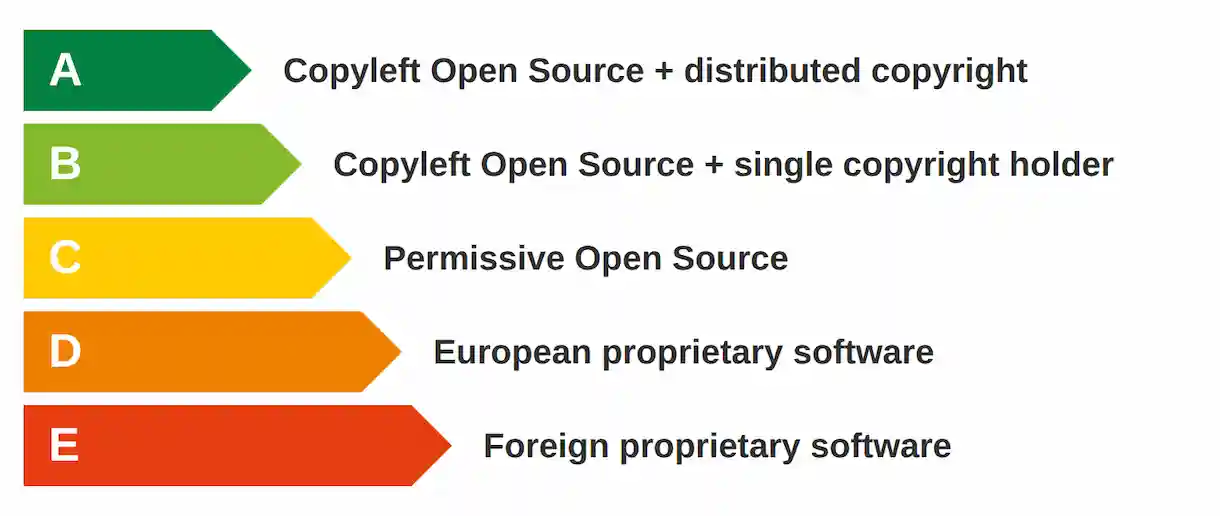
Buytaert wants to shift the discussion more toward licensing and advises using software that no one can take away from you. Depending on how “revocable” the software is, Buytaert distinguishes in his article between 5 categories, with the least desirable for European sovereignty being contracting foreign private commercial software and the most desirable being open source code with a very permissive license and distributed copyright. Having reached this point, it is worth noting that the European Union is famous for using Drupal widely and also for not worrying much about keeping it up to date.
Buytaert argues that not all open source code offers the same level of sovereignty. Not only does the license type matter, but so does the concentration of copyright. He proposes betting on open source code and controlling the risk of relicensing.
Finally, he proposes using the A to E scale that he proposes in the European Union’s software procurement policies and explicitly evaluating whether it is easy or not for someone to take the code or the license away from us.
Open source code, to conclude, is facing many problems with the arrival of AI. The exact impact of this technology remains to be seen, but the first serious problems are already being reported.
On the other hand, open source code can be generated in certain areas of the globe and can be used worldwide, even in areas with evident hostility and even military aggression. For this reason, perhaps new administrations might no longer be as open to betting on open source code.If you are concerned about the current geopolitical situation and want to buy more European products and use more open source code, which is very reasonable, you can bookmark the following websites:
- European alternatives for digital products: on this website you search for a brand or service and it suggests European alternatives.
- Open Source Alternatives to Popular Software: the same as the previous one, but in this case it suggests open source software, alternatives to private commercial software.
- Foro Eupedia: in forums you can also find lists and alternatives. This one from Eupedia has seemed especially interesting to us.
* Original article written in Spanish, translated with AI and reviewed in English by Jorge Mediavilla.